Happening Now
It Takes More Than a Weekend to Fix 116 Years of Neglect
June 17, 2026
By Jim Mathews / President & CEO
Amtrak briefed New York elected officials and the press today on progress in the East River Tunnel rehabilitation project, including the news that Line 2 is now expected to return to service in early August, a few weeks later than previously planned.
I know that’s frustrating news for passengers, and especially frustrating for Long Island Rail Road riders, Amtrak riders, NJ Transit riders, Empire Service passengers, and everyone else whose trip through Penn Station depends on the railroad equivalent of open-heart surgery being performed underneath the East River.
But let’s keep a little perspective.
Amtrak isn’t just changing light bulbs down there. It’s rebuilding one of the most important pieces of passenger-rail infrastructure in the United States. And 14 months to pour 16,000 feet of benchwall, replace everything down to the liner, set new track, re-signal, and all the rest feels like Mach 12 in a United States where we took 19 years and 11 months to restore two trains a day in a place where trains were already running between New Orleans and Mobile...
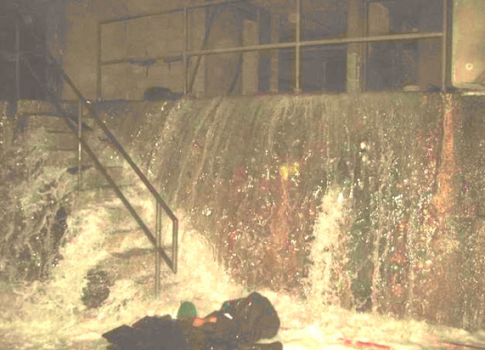
The East River Tunnel complex opened in 1910. Two of its four tubes were badly damaged by Superstorm Sandy in 2012, which sent 3.25 million gallons of corrosive saltwater into the tunnels. Since then, patchwork repairs have kept trains moving, but saltwater damage continued to degrade critical systems.
Now Amtrak is restoring and modernizing Lines 1 and 2, including structural repairs to the tunnel liner, leak mitigation, new drainage, direct-fixation track, new power, signal and communications systems, and new benchwalls that support emergency egress and operational access. That’s a lot more than a “nights and weekends” job.
This being New York, there has been plenty of criticism from local officials and the press about Amtrak’s decision to use long-term outages rather than try to perform the work only overnight or on weekends. To some extent, I get it: Nobody likes losing service, or schedule changes, or being told that the least bad option is still going to be painful.
Nonetheless, “do it on nights and weekends” sounds great until you remember that the work has to be done in the real world, inside a genuinely elderly railroad tunnel, beneath a tidal river, in one of the most congested passenger-rail territories anywhere on Planet Earth.
If there were a magic version of this project where crews could slip into the tunnel after dinner, rebuild a century-old railroad tube by breakfast, and leave everything spotless for the morning rush, I’d be all be for it. You probably would be, too. Unfortunately, infrastructure does not work that way. Neither does concrete. Nor signal systems, power systems, drainage systems, fire/life-safety systems, or benchwalls. It’s concentrated disruption versus prolonged disruption. And it really is a better choice.
For work of this scale, chopping the job into nights and weekends usually means repeated mobilization and demobilization of work crews, shorter productive work windows, more time spent clearing the railroad for service, more interface with live operations, more safety exposure for workers, and a longer period in which passengers live with uncertainty.
Laura Mason, Amtrak’s Executive VP for Capital Delivery, laid it out during today’s briefing: “To rely on night and weekend outages would have greatly increased the cost and extended the schedule, because for each one of those steps I described we would have had to put in temporary work starting on Sunday afternoon to make it fit for service Monday, and then we would have spent all of Friday night into Saturday morning taking out that temporary work.”
In fact, Amtrak’s engineering teams ran the numbers: doing the job on nights and weekends would have extended the project anywhere from 6-13 years and cost three times as much. Now, maybe I’m no engineer, but spreading painful disruption across many more years and tripling the project cost doesn’t strike me as much of an improvement. That’s why Rail Passengers supports the long-term outage approach.
I’m sure the comment section will light up below this piece, accusing us of accepting disruption, or expecting beleaguered New York and New Jersey passengers to shrug and take it. Not so. Nobody’s getting a free pass on protecting as much service as possible. But, unpopular as it might be, I’m not going to pretend that a full-depth tunnel reconstruction can be treated like routine maintenance.
Today’s briefing also noted that crews have encountered previously unknown conditions involving overhead catenary system insulators as Line 2 work comes down the stretch. In just the past few weeks, crews installing overhead-catenary support brackets found unexpected voids and leaks at 102 of 203 locations — exactly the kind of hidden condition you should expect when opening up infrastructure for the first time in a century. Inconvenient, yes, but not exactly shocking. Once crews strip away old systems and expose concrete that has been soaked, stressed, patched, and kept alive across many decades of daily railroad service, there are going to be unknowns. I’d be more surprised if there were no surprises.
In fact, I think that the discovery of unknown conditions strengthens the argument for full access. If crews are finding issues near the finish line under a continuous-outage approach, imagine trying to identify, diagnose, design around, and correct those same problems during fragmented night-and-weekend work windows while repeatedly handing the tunnel back over for daily service?
A few weeks of slippage isn’t great, but it’s not evidence that the long-term outage strategy was wrong. If anything, it shows that this was always going to be a hard, messy, necessary job.
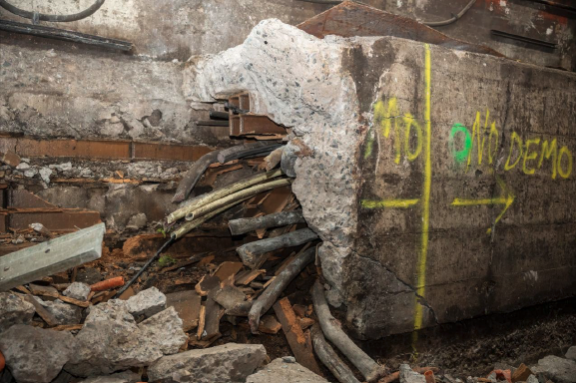
And because this Line was the harder of the two being rehabilitated, Amtrak says they’re going to apply lessons learned from that experience to the second tunnel when work begins there this Fall. The project team is developing a white paper to capture all of the things they discovered along the way, from the need to change the concrete mix for pumping deep into the tunnel across long distances, to ways to further improve drainage, or to use different kinds of equipment to demolish the benchwalls, or innovative improvised curing techniques for the concrete.
I wrote last year that the real East River Tunnel scandal was not the construction schedule. The real scandal was neglect. The region waited too long to address infrastructure that functions as the carotid artery of the New York regional economy. Once you wait until critical systems are at or beyond the end of their useful lives, the eventual repair is going to be more expensive, more disruptive, and more politically miserable than anyone wants, and that’s exactly where we are now.
The good news is that Line 2 is nearing completion, even with the newly identified conditions. Amtrak says Line 1 will come out of service this fall and return in late 2027, with the overall project still scheduled for completion by the end of 2027. That means passengers are beginning to see the other side of this work: a rebuilt tunnel, modern systems, better reliability, improved safety, and infrastructure ready to serve another generation...or two, or three, or four.
So, despite the inconvenience, let’s resist the easy fantasy that 116 years of accumulated infrastructure neglect can be solved with a few overnight shifts and a positive attitude. We can be impatient with delays, relentless about service, and demand accountability from everyone responsible for keeping trains moving, but we should also be serious. And taking a century-plus, storm-ravaged tunnel out of service long enough to actually rebuild it? That's serious.
"It is an honor to be recognized by the Rail Passengers Association for my efforts to strengthen and expand America’s passenger rail. Golden spikes were once used by railroads to mark the completion of important rail projects, so I am truly grateful to receive the Golden Spike Award as a way to mark the end of a career that I’ve spent fighting to invest in our country’s rail system. As Chair of the Transportation and Infrastructure Committee, it has been my priority to bolster funding for Amtrak, increase and expand routes, look to the future by supporting high-speed projects, and improve safety, culminating in $66 billion in new funding in the Bipartisan infrastructure Law."
Representative Peter DeFazio (OR-04)
March 30, 2022, on receiving the Association's Golden Spike Award for his years of dedication and commitment to passenger rail.
Comments